Bathroom pods vs traditional bathrooms: an honest comparison
Both methods produce a bathroom that looks the same to the person using it. The difference is where the work happens, who is responsible for it, and how predictable the result is. Here is a side-by-side view, including the cases where building on site is the better choice.
The short version
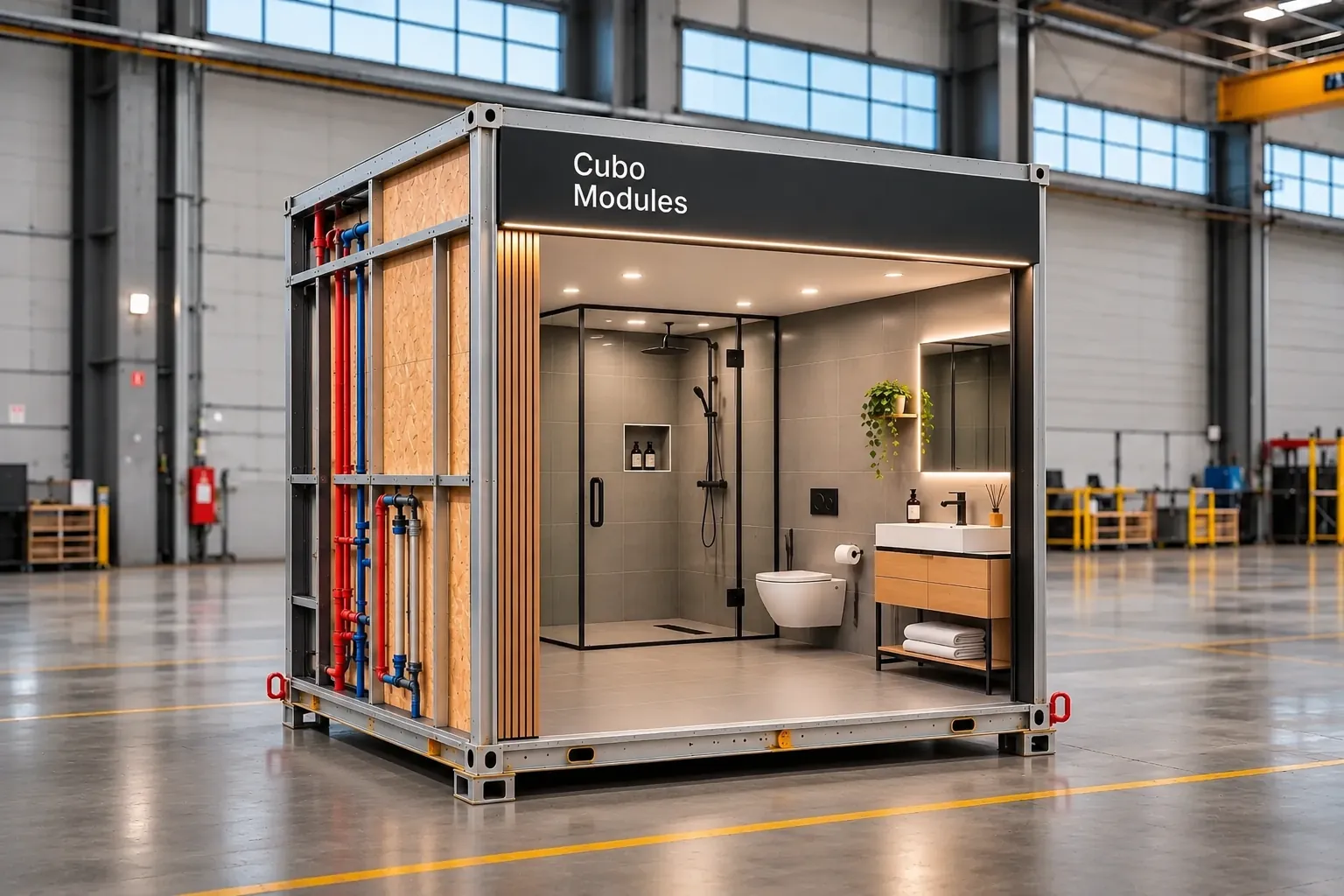
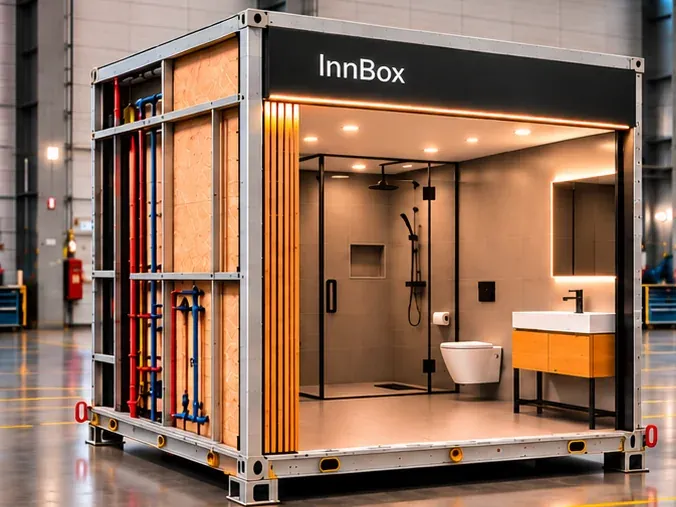
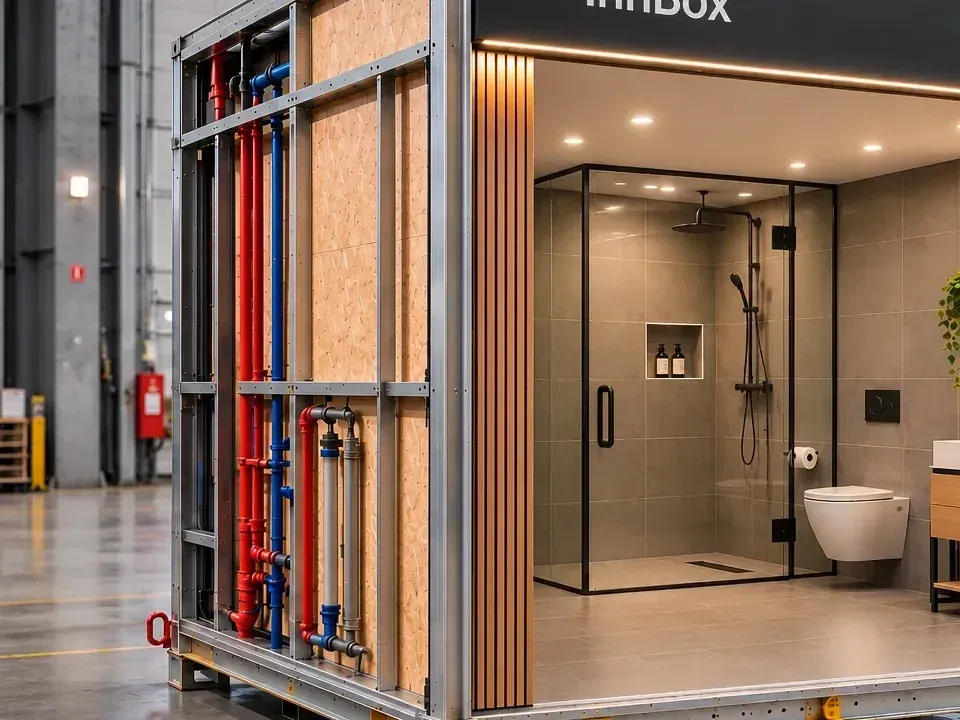
A traditional bathroom is built in place by several trades in sequence: plumber, electrician, drywall installer, waterproofing, tiler, glazier, finishing plumber and cleaner. A bathroom pod is built by one team in a factory and installed on site as a finished unit.
| Topic | Built on site | Bathroom pod |
|---|---|---|
| Where the work happens | In the building, room by room | In a factory; on site only lifting and connection |
| Number of trades on site | Many, in sequence | One installation crew |
| Quality control | Per room, often at the end | Per unit, before delivery, against an approved mock-up |
| Programme risk | Depends on trade availability and the order of work | Production runs in parallel with the building shell |
| Design changes late in the project | Easy | Costly once production has started |
| Best for | One-off or highly varied bathrooms | Many bathrooms with a few repeated layouts |
Quality and defects
Most bathroom defects come from a small set of details: waterproofing at corners and penetrations, falls to the drain, and joints between materials. On site these are done in changing conditions, often under time pressure at the end of a project, and by different people in each room.
In a factory the same details are done by the same team, at a workbench height, with good light and with the room standing still. Each pod is checked before it leaves. That does not make defects impossible, but it makes them easier to find early and to prevent from repeating.
Programme and site logistics
With pods, bathroom production starts while the building is still going up. When the floors are ready, the finished pods are lifted in. The slow wet trades are removed from the critical path, and there are fewer people, materials and deliveries moving around the site.
The trade-off is planning. Pods must be ordered early, delivered in the right sequence and lifted in before the façade closes off access. Site storage, crane time and protection of finished units need to be part of the plan.
Cost
A pod is not automatically cheaper per unit. It replaces on-site labour with factory work, transport and lifting. The saving comes from the whole project: a shorter programme, fewer trades to coordinate, fewer defects to fix at handover and earlier occupancy or rental income. We explain the cost drivers in detail in how much a bathroom pod costs.
Design freedom
Finishes are not the limit: tiles, colours, fittings, lighting and mirrors can be chosen freely. The limit is variety in size and plumbing layout. Every different footprint or connection position is a new pod type. Projects that keep to a handful of layouts get the most out of prefabrication.
When building on site is the better choice
- A single bathroom, or a few bathrooms that are all different.
- Designs that will keep changing after the order would have to be placed.
- Sites where a pod cannot physically be brought in or lifted into place.
- Projects far from the factory with very few units, where transport outweighs the savings.
Where a full pod will not fit through the door, a flat-pack kit brings most of the same benefits in parts that fit through a standard doorway.
Frequently asked questions
Do bathroom pods look prefabricated?
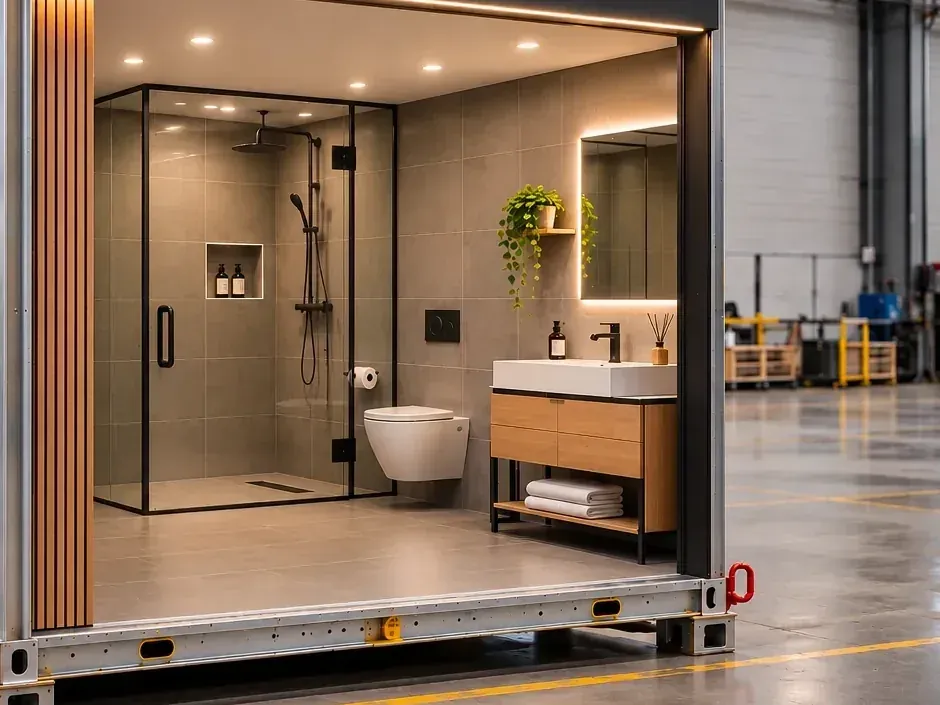
No. A pod uses the same tiles, glass and sanitaryware as a bathroom built on site. The joints to the surrounding walls and floor are finished on site so that the room looks built in.
Are pods heavier than a normal bathroom?
A pod brings its own floor, walls and ceiling, so the structure needs to be designed for its weight and the way it is placed. We provide the weight and support details per layout: [X] kg for a standard unit.
Who is responsible if something leaks?
With a pod, one supplier is responsible for the whole bathroom up to the connection points, and the pod is tested before delivery. On site, the installer is responsible for the connections.
Written by the Cubo Module engineering team. Questions about your project? Contact us.